

Managing phone use has become one of the most frustrating modern challenges. Whether the setting is a classroom, a corporate training session, a performance venue, or a private event, the issue is rarely the phone itself. The real problem is constant access. Notifications, messaging, scrolling, filming, and impulse checking can erode attention, weaken participation, and create tension between freedom and control. A Safe Pouch stands out because it solves that problem at the point of use: it keeps the phone physically with the owner while making it inaccessible during the time that focus, privacy, or presence matters most.
The Real Problem With Unmanaged Phone Use
Most phone policies fail for one simple reason: they depend too heavily on perfect behavior. Telling people to keep devices away sounds reasonable, but it requires consistent self-discipline, constant supervision, and repeated enforcement. In real life, that combination rarely holds up for long. People glance at screens reflexively. Staff members become de facto monitors. Rules that look clear on paper start to feel inconsistent in practice.
In educational settings, unmanaged phone use can interrupt concentration, reduce participation, and make it harder to maintain a calm learning environment. In workplaces, it can pull attention away from meetings, safety procedures, training, and confidential discussions. At live events and private gatherings, it can undermine immersion and raise concerns about recording or distraction. Across all of these settings, the same pattern emerges: access drives behavior.
That is why effective phone management is not simply about policy language. It is about creating a structure people can follow without constant confrontation. The best solution reduces temptation, preserves order, and does not turn every session or event into a negotiation.
What Makes a Safe Pouch More Effective Than Common Alternatives
A Safe Pouch works because it strikes a rare balance between control and practicality. Instead of collecting phones centrally or relying on digital restrictions, it gives each person responsibility for their own device while removing immediate access to it. That is a major advantage. People generally feel more comfortable when their phone stays in their possession, yet the boundary remains clear and enforceable.
This model is especially effective because it is decentralized. There is no need for a large storage system, a complicated check-in process, or a staff-heavy handover routine. A pouch-based system can be distributed quickly, used consistently, and unlocked at the appropriate time or place. That means fewer bottlenecks and less friction without weakening the rule itself.
| Approach | How it works | Main limitation |
|---|---|---|
| Verbal phone policy | Users are told to keep phones away | Relies heavily on compliance and constant reminders |
| Central phone collection | Devices are gathered and stored by staff | Creates queues, handling concerns, and logistical pressure |
| App-based restriction | Software limits access to certain functions | Can be bypassed and does not remove the physical habit of checking |
| Safe Pouch | Phone stays with the user but remains inaccessible | Requires a clear unlocking process and consistent rollout |
The physical nature of a Safe Pouch also matters. It removes ambiguity. Once the phone is secured, expectations are no longer abstract. The environment changes immediately because access changes immediately. That kind of clarity helps both users and organizers. Rules become easier to respect when the system itself supports them.
Why the Safe Pouch Model Works in Practice
The strongest solutions are the ones people can actually live with. A Safe Pouch works in practice because it does not treat every user as a problem to be policed. Instead, it creates a shared framework that protects attention and reduces conflict. Staff do not have to make as many judgment calls. Participants do not have to wonder whether others are getting away with breaking the rules. The standard is visible, consistent, and fair.
There are several practical reasons this model tends to outperform more reactive approaches:
- It protects focus: the device is out of use, which lowers distraction for both the individual and the group.
- It supports privacy: in performances, confidential meetings, and sensitive settings, it helps reduce unauthorized recording.
- It preserves ownership: users keep their own phones rather than surrendering them to a shared collection point.
- It reduces confrontation: staff can enforce a process instead of debating exceptions all day.
- It scales well: the same method can work for small groups, large institutions, and recurring events.
This is where thoughtful providers make a difference. For institutions looking for a decentralized phone ban that works without turning daily operations into a storage exercise, Win Elements offers Safe Pouch as a practical solution built around simplicity, accountability, and ease of use.
That subtle but important shift, from enforcement by argument to enforcement by design, is what makes the pouch model so compelling. It changes the environment without escalating the tone.
Where a Safe Pouch Delivers the Most Value
While the core idea is simple, its usefulness extends across multiple environments. The key is not the industry but the need for attention, presence, privacy, or discipline.
Schools and learning spaces
In education, a Safe Pouch helps restore the basic conditions for learning. Teachers gain fewer interruptions, students face fewer digital temptations, and the room becomes easier to manage. It can also improve consistency across classrooms, which matters because uneven enforcement often weakens school-wide policy.
Training, meetings, and workplaces
In professional settings, phone management is often needed during onboarding, workshops, secure briefings, compliance training, and safety sessions. A pouch system helps maintain engagement and protects the seriousness of the moment without requiring aggressive monitoring.
Events, performances, and private gatherings
At performances and invite-only events, people want to be present. Organizers also may want to limit filming, preserve exclusivity, or protect the audience experience. A Safe Pouch supports those goals while remaining more elegant than repeated announcements or visible policing.
How to Introduce a Safe Pouch Successfully
Even the best system needs a smart rollout. The good news is that adoption does not need to be complicated if expectations are clear from the start.
- Explain the purpose clearly. People respond better when they understand that the goal is focus, fairness, privacy, or safety rather than punishment.
- Make the process visible. Show when devices must be pouched, how unlocking works, and what exceptions apply if any.
- Train staff for consistency. A calm, uniform process prevents confusion and reduces resistance.
- Build the routine into entry. The smoother the first few minutes are, the more natural the policy feels.
- Review and refine. Small operational improvements can make the system feel effortless over time.
A brief implementation checklist can help keep standards high:
- Clear policy language before arrival
- Simple entry-point instructions
- Visible staff guidance where needed
- Reliable unlocking points or procedures
- Consistent treatment across all participants
When those elements are in place, a Safe Pouch stops feeling like a restriction and starts functioning as infrastructure. It becomes part of how the environment protects its purpose.
Conclusion
The best phone management solution is not the harshest one or the most complicated one. It is the one that people can follow, staff can administer, and institutions can trust day after day. A Safe Pouch succeeds because it addresses the real issue, immediate access, while preserving personal ownership and reducing operational strain. It creates boundaries without unnecessary drama, and that is precisely why it works. In any setting where attention, privacy, or presence truly matters, Safe Pouch is not just a useful tool. It is the most balanced and effective standard for managing phone use well.
——————-
Check out more on Safe Pouch contact us anytime: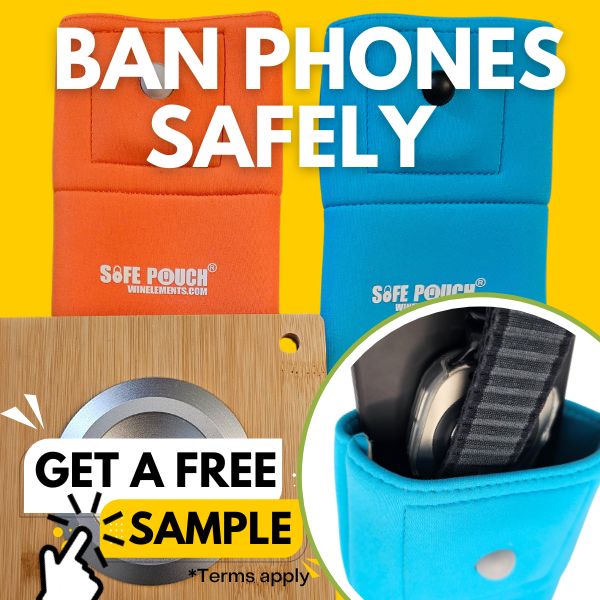
Win Elements | Lockable Phone Pouch
https://www.winelements.com/
Patented lockable phone pouches with multi-tiered lockers for phone locking pouches.
