
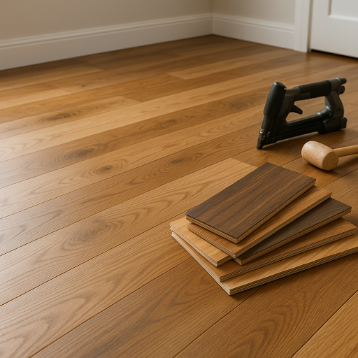
Custom hardwood flooring does more than cover a subfloor. It shapes the mood of a room, influences how light moves through a home, and adds a level of permanence that few finishes can match. When the floor is selected with intention, it becomes part of the architecture rather than just a surface underfoot. That is why custom work deserves a more careful approach than simply choosing a color from a display board. The right choice balances appearance, durability, room function, and the way the home will age over time.
Why Custom Hardwood Flooring Feels Different
One of the biggest advantages of custom hardwood flooring is control. Instead of settling for a standard product with limited sizing and finish options, you can shape the floor around the home itself. That may mean selecting a species that complements historic trim, choosing plank widths that make smaller rooms feel broader, or using a finish that softens the contrast between old and new materials.
Customization also allows for a more cohesive design. Floor tone affects cabinetry, wall paint, furniture, and even natural daylight. A floor that looks perfect in a showroom can feel too orange, too dark, or too busy once it is installed across an entire level. With a custom approach, you have more room to think through undertones, grain variation, sheen level, and transition details so the result feels intentional from one room to the next.
There is also a practical side. Not every household lives the same way. Some homes need tougher finishes to handle pets and active family life. Others prioritize a more traditional look, where subtle wear becomes part of the floor’s character. If you are comparing samples, finishes, and site conditions, it helps to work with professionals who understand both design and subfloor realities in hardwood flooring. That knowledge is often what separates a floor that simply looks good on day one from one that continues to perform beautifully for years.
Key Choices That Define the Final Look
Custom flooring decisions are usually made in layers. Homeowners often begin with color, but the most successful projects start one step earlier: with wood species and grain pattern. Oak remains a favorite because it is versatile, durable, and available in a wide range of stains. White oak tends to read a little cleaner and more contemporary, while red oak can bring warmth and a more classic visual texture. Maple offers a smoother, quieter grain, and hickory creates stronger movement and contrast.
Once species is chosen, plank dimensions begin to matter. Wider planks can create a calm, expansive look, especially in open-plan spaces, while narrower boards often suit traditional homes or rooms with more architectural detail. Board length also affects the floor’s overall rhythm. Long boards usually make an installation feel more elevated and less busy.
Another major decision is finish. Sheen level changes how formal or relaxed a floor appears. High-gloss finishes emphasize reflection and drama, but they also reveal scratches and dust more easily. Matte and low-sheen finishes are often preferred in modern homes because they feel more understated and forgiving. Color deserves the same level of care. Cool neutrals, warm honey tones, and deeper browns each create a distinct atmosphere, and each interacts differently with wall color, natural light, and trim.
- Species: Shapes grain pattern, hardness, and stain response.
- Plank width: Influences scale and visual openness.
- Board length: Affects how refined or busy the floor appears.
- Finish sheen: Changes maintenance visibility and mood.
- Color tone: Connects the floor to cabinets, paint, and furnishings.
Solid vs. Engineered: Choosing the Right Construction
Custom hardwood flooring is not only about appearance. Construction matters, especially when humidity, subfloor type, and room location come into play. Solid hardwood is milled from a single piece of wood and has long been valued for its authenticity and ability to be refinished multiple times. It is a strong choice for many above-grade living spaces when environmental conditions are stable.
Engineered hardwood uses a real wood wear layer over a layered core. That construction can provide greater dimensional stability, which is helpful in spaces where moisture or seasonal movement is a concern. It is often considered for basements, condos, or homes where temperature control varies more throughout the year. The best option depends on where the floor is going and how the home performs in all seasons, not just how the sample looks in hand.
| Option | Best For | Key Strength | Consideration |
|---|---|---|---|
| Solid hardwood | Main living areas, traditional installations | Can be refinished multiple times | More sensitive to moisture and movement |
| Engineered hardwood | Condos, lower levels, variable conditions | Better dimensional stability | Refinishing potential depends on wear layer |
| Site-finished floor | Fully customized projects | Seamless appearance and tailored stain | Longer installation timeline |
| Prefinished floor | Faster renovations | Quicker occupancy after installation | Less flexibility in final finish look |
For homeowners seeking a tailored result, the construction choice should always be paired with an honest assessment of the space. A beautiful floor can underperform if the product does not match the conditions beneath it.
How to Plan a Custom Hardwood Flooring Project Well
A premium result usually comes from planning, not guesswork. Before any boards are ordered, the room should be evaluated as a complete system. That includes subfloor condition, moisture levels, room transitions, baseboards, stair details, and how the floor will meet tile or stone in neighboring spaces. Seemingly small decisions at this stage often have the biggest impact on the finished look.
- Define the design direction. Gather cabinet finishes, paint selections, and furniture references so the flooring choice supports the whole room.
- Review site conditions. Check subfloor flatness, moisture exposure, and seasonal climate patterns inside the home.
- Choose layout details. Decide on plank direction, border treatments if any, vent integration, and transition style.
- Confirm finish expectations. Discuss sheen, texture, stain depth, and how natural variation will appear across larger areas.
- Prepare the home. Coordinate furniture removal, dust containment, access, and cure time if the floor will be site-finished.
Installation quality is just as important as material quality. Precision in layout, acclimation, leveling, and finishing work determines whether the floor feels custom or merely expensive. This is where an experienced company can make a clear difference. Bare Naked Flooring fits naturally into that conversation because custom projects often require careful guidance, from selecting the right material to executing clean transitions and a finish that suits the home rather than fighting it.
Caring for Custom Hardwood Flooring So It Ages Beautifully
One reason hardwood remains so desirable is that it can mature gracefully. Unlike many surfaces that look worse as they age, wood can develop a richer, more settled appearance over time. Still, that only happens when day-to-day care supports the finish rather than wearing it down unnecessarily.
The most effective maintenance is simple and consistent. Dust and grit act like sandpaper, so regular sweeping or vacuuming with a floor-safe attachment matters. Spills should be wiped up promptly, especially around sinks, entry points, and pet areas. Felt pads under furniture help prevent scratches, and rugs near exterior doors can reduce tracked-in debris. Indoor humidity should also remain as stable as possible, because wood responds to environmental swings with expansion and contraction.
It is equally important to know what not to do. Harsh cleaners, excessive water, steam mops, and wax products not intended for the specific finish can all compromise the floor. When wear does begin to show, the solution is not always full replacement. Depending on the floor type and finish system, maintenance coats or refinishing may restore appearance and extend service life significantly.
A well-chosen hardwood floor should not feel precious. It should feel lived in, well cared for, and increasingly at home in the space it was chosen for.
Conclusion: Invest in Hardwood Flooring With Intent
The appeal of custom hardwood flooring lies in its ability to do two things at once: elevate the design of a home and support the way that home is actually used. The best results come from looking beyond color alone and considering species, plank scale, construction, finish, installation quality, and long-term care as part of one connected decision. When those pieces align, the floor does more than look impressive. It brings warmth, visual continuity, and lasting value to everyday living.
For homeowners ready to make that investment, thoughtful guidance matters. A tailored approach from a specialist such as Bare Naked Flooring can help turn a broad idea into a floor that feels specific to the home, the architecture, and the people who live there. In the end, great hardwood flooring is not just customized. It is considered, balanced, and built to endure.
——————-
Article posted by:
Custom Hardwood Flooring Services | Bare Naked Flooring
https://www.barenakedfloorsllc.com/
Duluth – Minnesota, United States
